What happens during a digital modernization engagement at Clockwork
A step-by-step breakdown of how Clockwork approaches digital product modernization engagements, from the initial problem proof to enterprise-wide scaling.

When mid-market manufacturers and enterprise organizations partner with Clockwork for digital product development, the engagement never starts with writing code. Instead, we run a validated four-phase framework—spanning problem discovery, value testing, impact verification, and enterprise-wide rollout—to validate decisions before spending bulk capital on engineering. This structured approach helps B2B organizations replace brittle systems without halting active operations, keeping business units focused and preventing the adoption failures that derail massive IT overhauls.
Rushing to rebuild an entire legacy system all at once is the fastest way to drain your budget and frustrate your staff. Decades of enterprise software projects show that big-bang releases create operational chaos, produce scope creep, and alienate the people expected to use the software. A disciplined modernization path breaks that cycle by treating digital transformation as a series of deliberate, low-risk stages rather than a blind leap Why phasing matters in product modernization.
Before we begin: getting everyone in the same room
At Clockwork, our work with industrial clients and complex service organizations starts by addressing organizational boundaries. In most mid-market manufacturing companies, enterprise technology touches three distinct groups: IT leaders, plant or operations directors, and commercial sales teams. Each group views the operational reality through a different lens.
Sales wants modern order entry to stop dealers from picking up the phone. Operations wants clean demand signals that match shop-floor inventory. IT must protect infrastructure security, manage data pipelines, and keep legacy databases stable. When these three groups work in silos, technology initiatives fail before a line of code is written manufacturing operations.
Before scheduling sprints or specifying database architectures, we bring these stakeholders together. We identify who owns which business outcome, what operational bottlenecks cause the most friction, and what success looks like across every affected department.
The 90-minute Clockworkshop
To cut through competing agendas, we often begin with a focused, 90-minute working session known as a Clockworkshop. This session is designed to diagnose what is happening beneath the surface, isolate the single most urgent problem to fix, and establish clear next steps without a massive upfront contract.
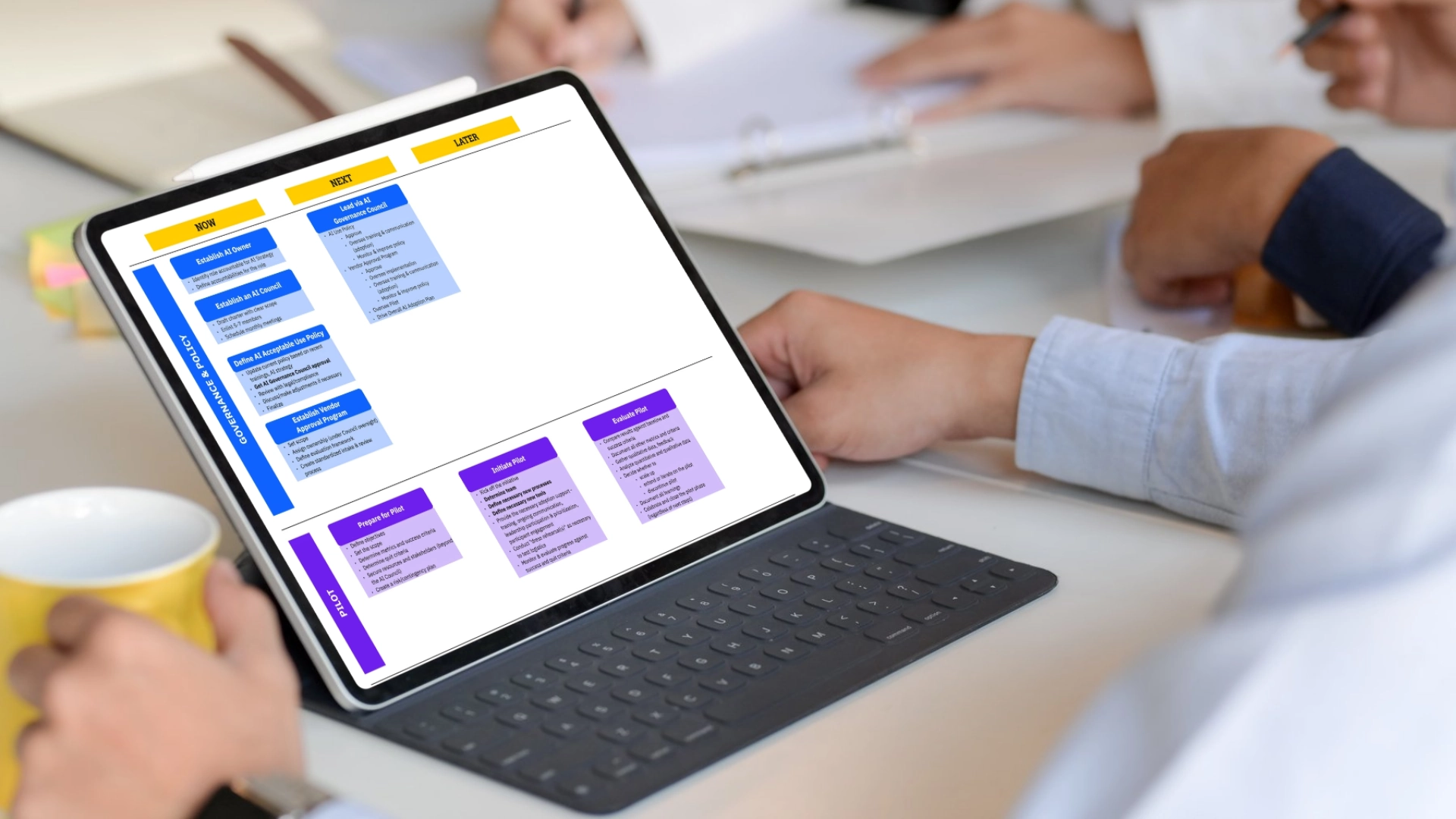
During this session, teams map their existing workflows, flag redundant data steps, and identify where tools fail to support daily tasks. When leaders see the entire operational journey laid out on a single board, departmental friction usually turns into practical agreement. You leave with an objective assessment of what needs fixing first, who needs to be involved, and which technical path makes practical sense why workshops are the perfect way to start a project.

Phase 1: Proof of problem
The first official phase of a Clockwork modernization engagement establishes an unvarnished baseline of the current state. We do not accept assumptions at face value. If leadership reports that field sales reps refuse to use the CRM, we find out why by interviewing the reps, observing their daily routines, and inspecting the data they enter into secondary spreadsheets.
During proof of problem, we answer three straightforward questions:
- What specific operational friction costs the business time, revenue, or customer retention?
- Which existing processes work well enough to leave untouched for now?
- What underlying technical or cultural constraints create friction for the workforce?
Most modernization attempts stumble because leadership attempts to solve five symptoms at once instead of isolating the root cause. A company might spend months attempting to replace an entire enterprise resource planning system when the primary issue is simply an opaque order status view that forces distributors to call customer support.
Phase 1 separates cosmetic frustrations from structural bottlenecks. We review existing system architectures, observe staff interacting with current tools, and identify data gaps between disparate software platforms.
The deliverable from Phase 1 is not a theoretical 200-page slide deck. It is a defined problem statement, a shared understanding across your leadership team, and the factual foundation required to justify budget allocation to your board or executive committee.
Phase 2: Proof of value
Once the core problem is clear, Phase 2 tests the proposed solution without committing to a full software build. Instead of spending six months developing production software, Clockwork designs interactive prototypes and test environments to confirm that the concept works for actual users.
During this phase, we place realistic interfaces and workflows directly into the hands of your staff, dealers, or field technicians. We watch how they interact with the tool, note where confusion surfaces, and refine the interface based on observed behavior.
| Dimension | Proof of Value (Prototype) | Traditional Blind Build |
|---|---|---|
| Investment profile | 10% to 15% of project budget | 100% committed upfront |
| Validation timeline | 2 to 4 weeks | 6 to 12 months |
| User feedback loop | Direct observation on interactive mocks | Delayed until user acceptance testing |
| Technical risk | Identified and isolated early | Discovered during final system deployment |
| Scope flexibility | Changes take hours in design assets | Changes require expensive engineering rework |
Testing our direction through rapid prototypes also validates technical feasibility. Our engineering leads evaluate how data must move between legacy databases, modern cloud infrastructure, and third-party APIs. We verify whether existing systems can handle required transaction volumes or if middleware is necessary to protect system performance.
By concluding Phase 2 with tested prototypes, your leadership team gains a documented business case backed by real user feedback. You know what needs to be built, what it will cost, and how your team will use it.
Phase 3: Proof of impact
With a validated design and confirmed architecture, Clockwork moves into Phase 3 to deliver a Minimum Marketable Product (MMP). This is not an internal test prototype; it is fully functioning software deployed into active business workflows.
The MMP focuses strictly on solving the primary problem identified in Phase 1. If an industrial equipment manufacturer struggles with order entry errors, the MMP might address only high-volume standard catalog orders for a select group of trusted distributors, leaving custom order logic for later releases how to fix low sales portal adoption before writing code.
Getting real software into production quickly delivers three specific benefits:
- Your organization begins capturing measurable operational value within weeks instead of waiting a year.
- Real production data reveals system bottlenecks and integration bugs under actual field conditions.
- Internal confidence rises because employees see tangible progress rather than endless strategy reviews.
Phase 3 is also where security, system resilience, and governance standards are built into the code. Because Clockwork is SOC 2 certified, we embed data security protocols and operational governance straight into the solution,. Client data is never used to train public machine learning models, and access controls match enterprise compliance standards from the very first deployment.
By the end of Phase 3, the digital product proves its value in real business operations. The baseline technical architecture is sound, users are transacting, and leadership has hard metrics showing business impact.
Phase 4: Implement and scale
Phase 4 takes the proven core product and rolls it out across the broader enterprise. With the core workflows validated, our engineering team systematically adds secondary feature sets, expands system integrations, and prepares the platform for enterprise volume.
Scaling enterprise software requires deliberate change management alongside technical execution. Many modernizations fail during rollout because management assumes people will use a tool simply because it exists. At Clockwork, our change strategists work alongside software engineers to build clear onboarding paths, role-specific documentation, and feedback mechanisms that protect user adoption.
If the software serves external partners—such as a dealer portal or distributor ordering tool—we help stage the transition so business remains uninterrupted. We migrate accounts in controlled cohorts, monitor system performance across peak usage periods, and provide immediate support to resolve questions before frustration takes root.
Internally, Phase 4 connects the platform deeply into existing enterprise environments, integrating with platforms like SAP, Microsoft Dynamics, or Salesforce. The result is an integrated platform that removes duplicate data entry, delivers clear operational reporting, and scales predictably as business volume expands.
After the rollout: making new ways of working stick
A successful software modernization should never leave an organization dependent on an outside agency for routine maintenance. At Clockwork, we view our engagements as collaborative partnerships aimed at strengthening internal capabilities.
Throughout each phase, our engineers and strategists work directly alongside your internal developers, product owners, and business analysts. We share architectural decisions, review code together, and establish clean documentation standards. This ongoing knowledge transfer means your internal team understands the system inside and out by the time Phase 4 concludes technology and strategy consulting.
We also establish structured governance practices. These routines help your product managers evaluate future feature requests, track system performance metrics, and maintain data hygiene over time. By building internal capability alongside the software, we protect your technology investment and keep momentum moving forward long after the initial release.
Frequently asked questions about our process
Do we need all four phases?
Not every project requires every phase from scratch. Our modernization framework adapts based on where your organization stands and what facts you have verified:
- If you have already validated your primary user problem with hard evidence, we can start in Phase 2 to test prototypes.
- If you have an approved business case and executive alignment, Phase 3 lets us focus on deploying a functional MMP into production quickly.
- If you have a working custom tool that is struggling under new transaction volumes, Phase 4 provides the engineering depth needed to scale it enterprise-wide.
The framework requires honesty about what your organization has proven versus what it assumes. Skipping discovery when you only suspect what is broken almost always leads to rebuilding software six months down the road.
Do we need a data team in-house?
No. Many manufacturing and mid-market organizations partner with Clockwork precisely because they lack dedicated internal data engineers or software architects. We provide the technical depth required to clean legacy databases, build integration middleware, and establish secure pipelines without requiring you to hire a full engineering department first.
What we do need from your organization is access to the subject matter experts who understand your operational workflows: plant managers, sales directors, and customer support leads. We combine our technical execution with your domain knowledge to build tools that fit your actual operational reality.
How long before we see something actually working?
For teams starting with an initial diagnostic or proof-of-problem phase, you will have a clear baseline and prioritized roadmap within weeks. When building prototypes or developing an MMP pilot, our goal is to place functional tools into actual workflows as fast as possible rather than disappearing for months of silent development.
Because we work in phased increments, your leadership team evaluates functional deliverables at every milestone. That steady visibility prevents surprises, protects your capital, and proves return on investment before you expand into subsequent development phases.
Modernize your digital platforms with Clockwork
Legacy systems become liabilities when they force your people into manual workarounds, slow down order fulfillment, and trap critical business data in disconnected databases. Modernizing those systems does not require a disruptive multi-year bet that risks operational stability.
Clockwork brings 25 years of experience helping B2B enterprises untangle technical complexity, design human-centered tools, and modernize core software platforms. Whether you need to align internal leadership on where to begin, prototype a dealer portal, or replace a legacy workflow, our phased process keeps risk low and operational adoption high.
Contact the team at Clockwork to discuss where your current technology is stalling and determine which modernization phase fits your immediate business objectives.