How Clockwork structures technology consulting engagements: 25 years of delivery data
An inside look at how Clockwork structures B2B technology consulting engagements, drawing on 25 years of delivery data and a 95% returning client rate.
Ninety-five percent of Clockwork engagements are with returning clients, a retention rate built over 25 years in Minneapolis, MN, with a cross-disciplinary team of 45+ Clockworkers and a 5/5 rating on Clutch.co. Rather than forcing organizations into a single rigid methodology, Clockwork matches its consulting structure to where a client stands operationally—ranging from 90-minute diagnostic Clockworkshop sessions and structured AI readiness diagnostics to 3-month timeboxed sprints and 10+ year continuous product partnerships. For Upper Midwest B2B manufacturers and mid-market enterprises navigating legacy ERPs, stalled digital roadmaps, and SOC 2 certification requirements, this model pairs strategy directly with engineering and change management so software gets adopted instead of abandoned.
Why the traditional strategy handoff is where enterprise projects die
Most enterprise software projects fail in the gap between the people who write the strategy and the people who build the software. Traditional consulting firms treat discovery and delivery as separate commercial phases, which creates misaligned incentives from the first week.
A senior partner sells the engagement, a junior team conducts interviews, and the firm hands over a dense slide deck designed to justify the next multi-million-dollar contract. By the time an internal IT team or an outside systems integrator reads that deck, the operational context has already shifted.
Clockwork structures its Technology & Strategy Consulting engagements around a different rule: the team that diagnoses the problem stays to build, validate, and drive adoption. Strategists, experience designers, software engineers, and change management specialists work as a single unit from day one.
| Engagement dimension | Big consulting firm model | Clockwork integrated model |
|---|---|---|
| Sales vs. delivery team | Senior partner sells; junior analysts deliver | Cross-disciplinary practitioners lead both discovery and build |
| Primary deliverable | Static strategy deck and high-level roadmap | Working software, validated prototypes, and trained internal teams |
| Vendor and platform stance | Often tied to preferred enterprise license partners | Vendor-neutral evaluation based on operational requirements |
| Post-handoff ownership | Engagement ends at recommendation sign-off | Team stays through execution, validation, and user adoption |
| Success metric | On-time delivery of the strategy document | Measurable operational change and sustained tool usage |
Measuring success by what changes inside the organization rather than what gets printed in a binder changes how every conversation starts. When you know your own engineers will have to integrate with a 20-year-old ERP in month three, you stop writing theoretical architecture slides in month one.
Matching the entry point to your operational readiness
Organizations rarely arrive at a consulting engagement at the same starting line. Pushing a company with competing executive priorities into a six-month build wastes capital, just as forcing a team with a validated roadmap into redundant discovery workshops stalls momentum.
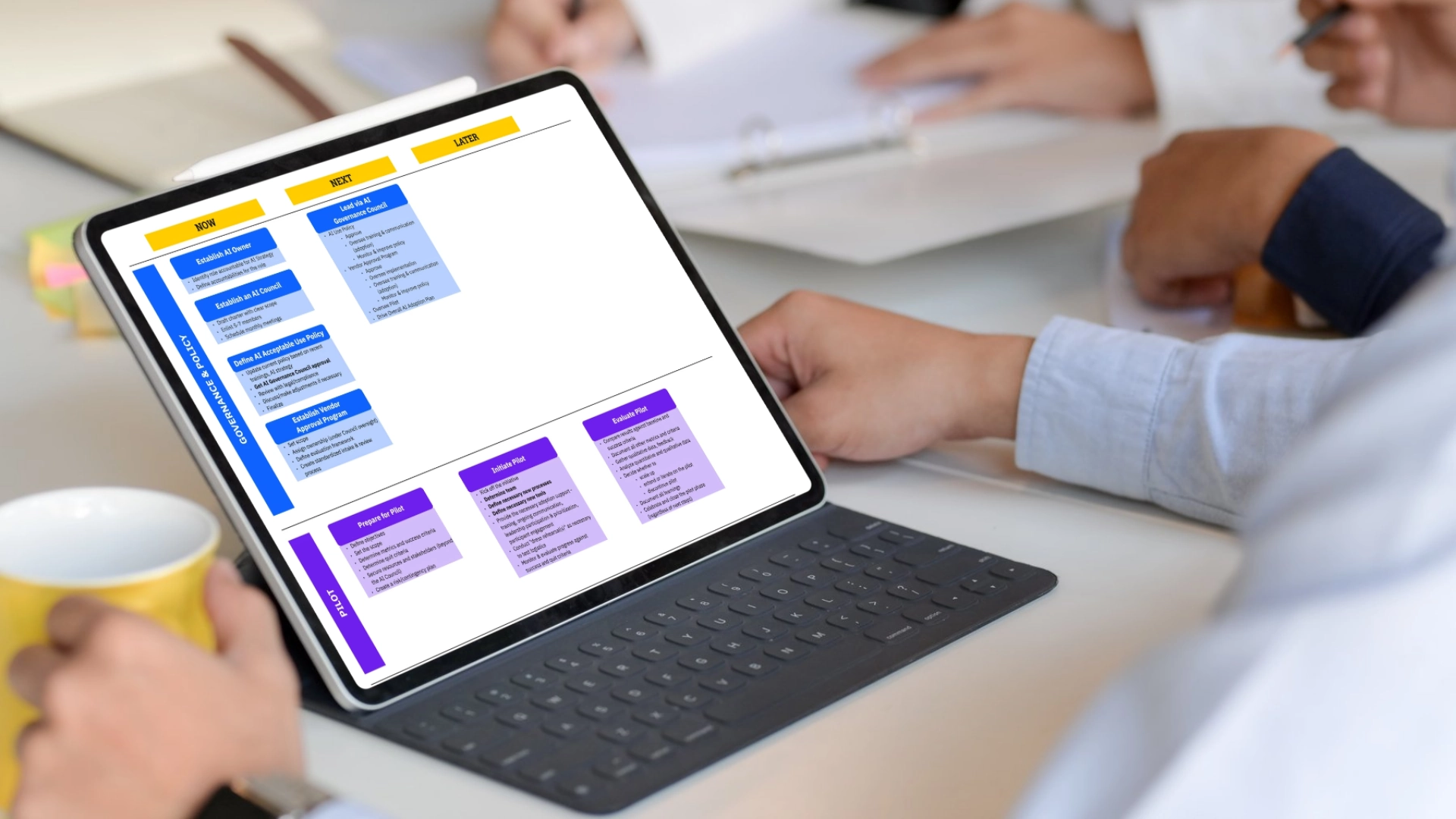
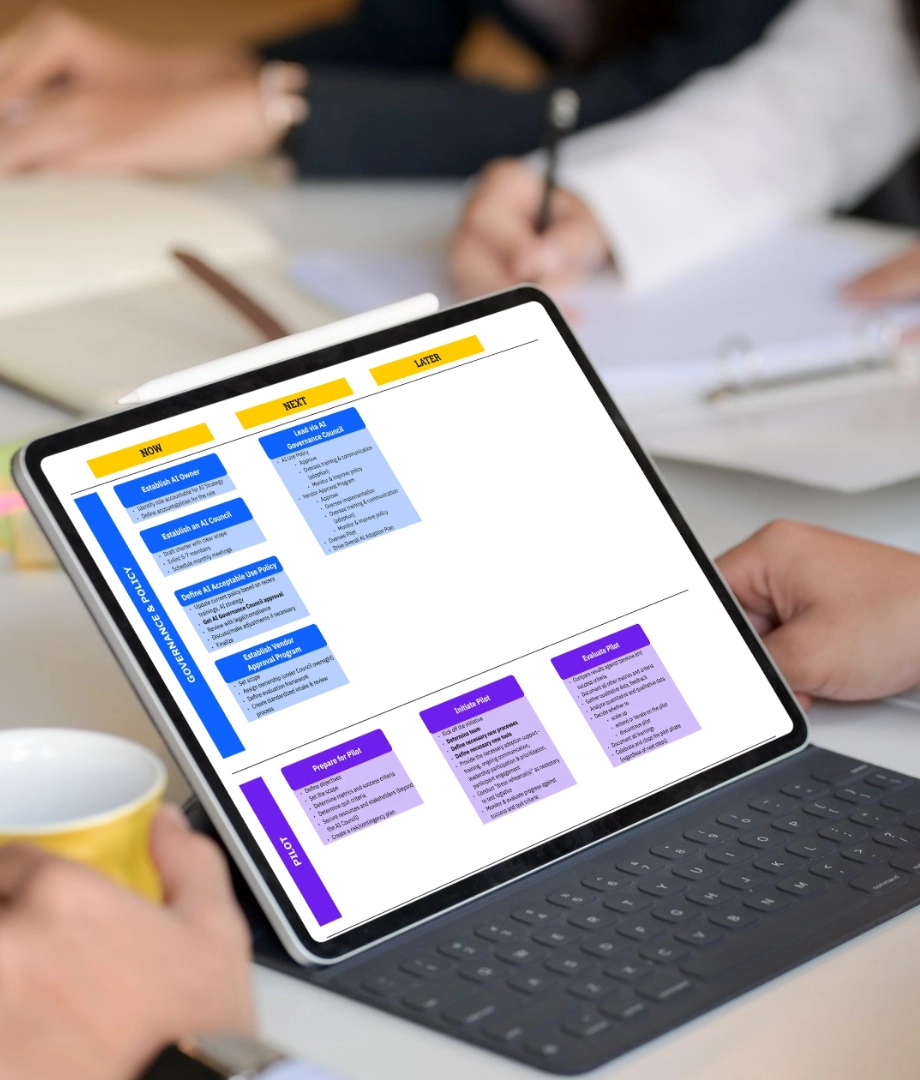
Clockwork maps four distinct starting conditions to specific engagement entry points:
- If leadership knows something needs to change but cannot agree on where to focus first, start with a 90-minute Clockworkshop.
- If executives have issued an AI mandate without clean data or governance, start with an AI readiness diagnostic.
- If a solid strategy already sits on a shelf because internal teams cannot get traction, bring in a team for a multi-phase pilot or execution rescue.
- If legacy ERPs or broken ordering workflows are actively blocking revenue growth, move directly into full-lifecycle product modernization.
When priorities are competing: the 90-minute Clockworkshop
When sales wants a new dealer portal, operations wants automated scheduling, and IT wants to stabilize the database, a standard RFP process only deepens the gridlock. A Clockworkshop is a 90-minute working session built to cut through competing agendas and define the single most important problem to solve first.
It acts as a low-commitment way to start a high-value technical conversation. Instead of spending weeks writing a statement of work around a symptom, leadership and practitioners leave the 90-minute session with a defined problem statement and concrete next steps.
When an AI mandate lacks a data foundation: the AI readiness diagnostic
Most mid-market companies feel pressure to deploy AI, yet their operational data sits fragmented across spreadsheets, legacy ERPs, and disconnected CRM instances. Jumping straight into model development on top of weak data guarantees rebuilding the entire system six months later with less budget and diminished stakeholder confidence.
Clockwork's AI readiness diagnostic gives organizations a clear picture of where their data and teams stand before they commit implementation dollars. You do not need perfect data to start, but you do need an honest assessment of the gaps that matter most and a practical path to close them.
Clients do not need an in-house data engineering team to run this diagnostic. Clockwork acts as an extension of the existing staff, pairing technical depth with hands-on AI foundations training so leadership understands both the opportunity and the governance boundaries. Within weeks, the organization receives an executable AI strategy and roadmap tied directly to business goals.
When a strategy exists but execution is stalling: multi-phase pilots and execution rescue
Many B2B companies already know what they want to build. They have invested in an internal strategy or an outside audit, yet six months later, no code has shipped and field teams are still working around the problem.
Usually, stalled execution points to an unaddressed stakeholder conflict or an architecture bottleneck that nobody flagged during planning. Clockwork steps in to diagnose where momentum broke down, runs a tightly scoped pilot to prove the solution in real workflows, and builds internal confidence before scaling.
When legacy systems block growth: full-lifecycle product modernization
When an outdated B2B ordering system or customer portal actively costs a company deals, incremental patches stop working. Clockwork approaches B2B product modernization by first uncovering the exact friction breaking the user experience across business units.
Technology selection during modernization remains strictly vendor-neutral. Because Clockwork is not compensated by platform kickbacks, the team evaluates ERP, CRM, and cloud options against your operational constraints and budget. If a platform you already own can solve the problem with better configuration, the team tells you that instead of pitching a rip-and-replace project.
How timelines and cross-disciplinary teams flex from 90 minutes to 10 years
Rigid agency retainers force every client into the same staffing model, regardless of technical complexity. In practice, a B2B consultancy needs to flex its cadence to match the problem's real boundaries.
On Clockwork's engineering floor, a single Product Owner might simultaneously manage two radically different engagements. One client might be in a strict 3-month timeboxed modernization sprint to replace outdated infrastructure, while another sits inside a 10+ year continuous product partnership. Both rely on complex, invisible back-end technology, yet their pacing, governance, and team rhythms look completely different.
Inside the four-stage delivery arc: problem definition, alignment, design, and execution
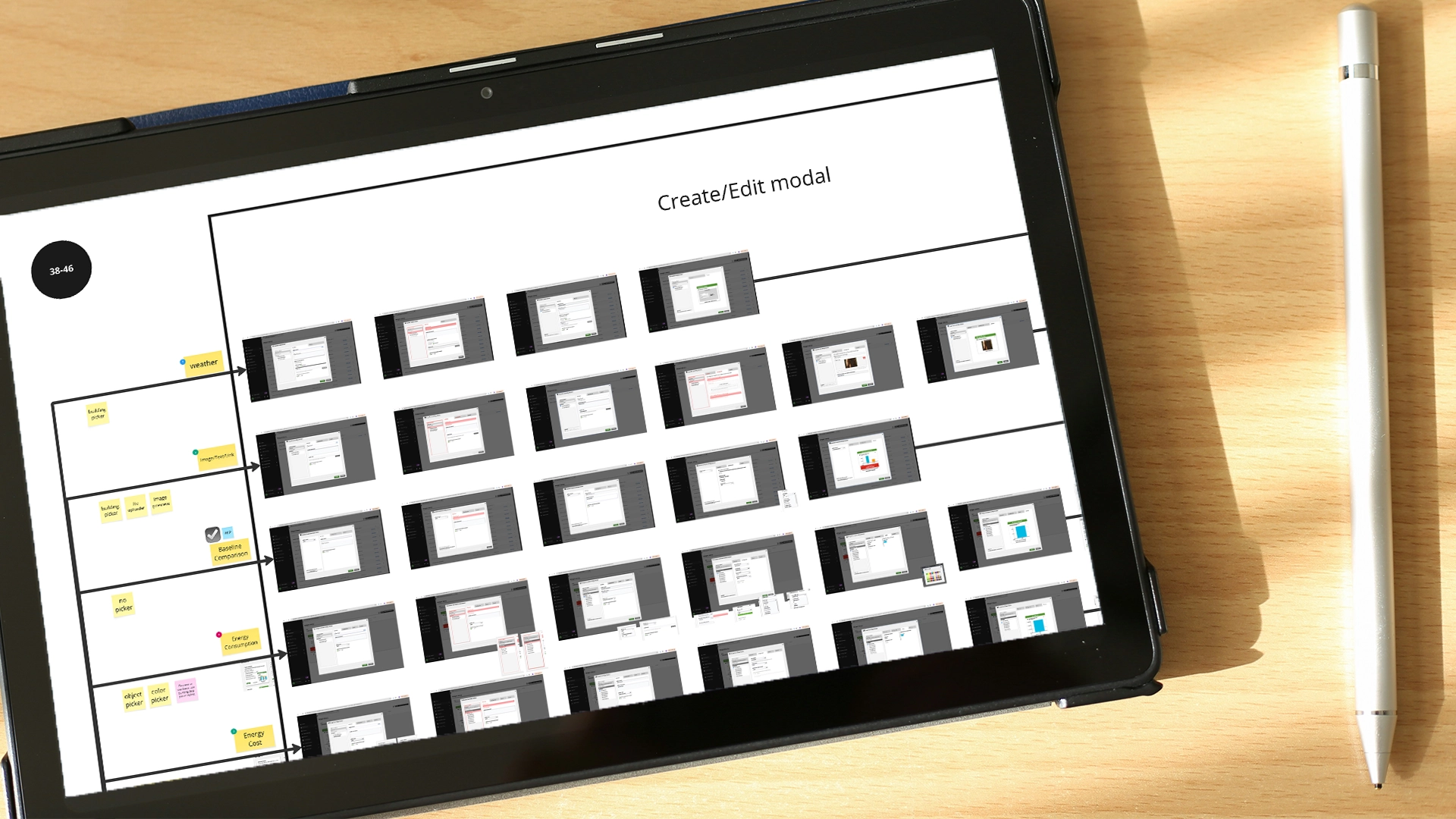
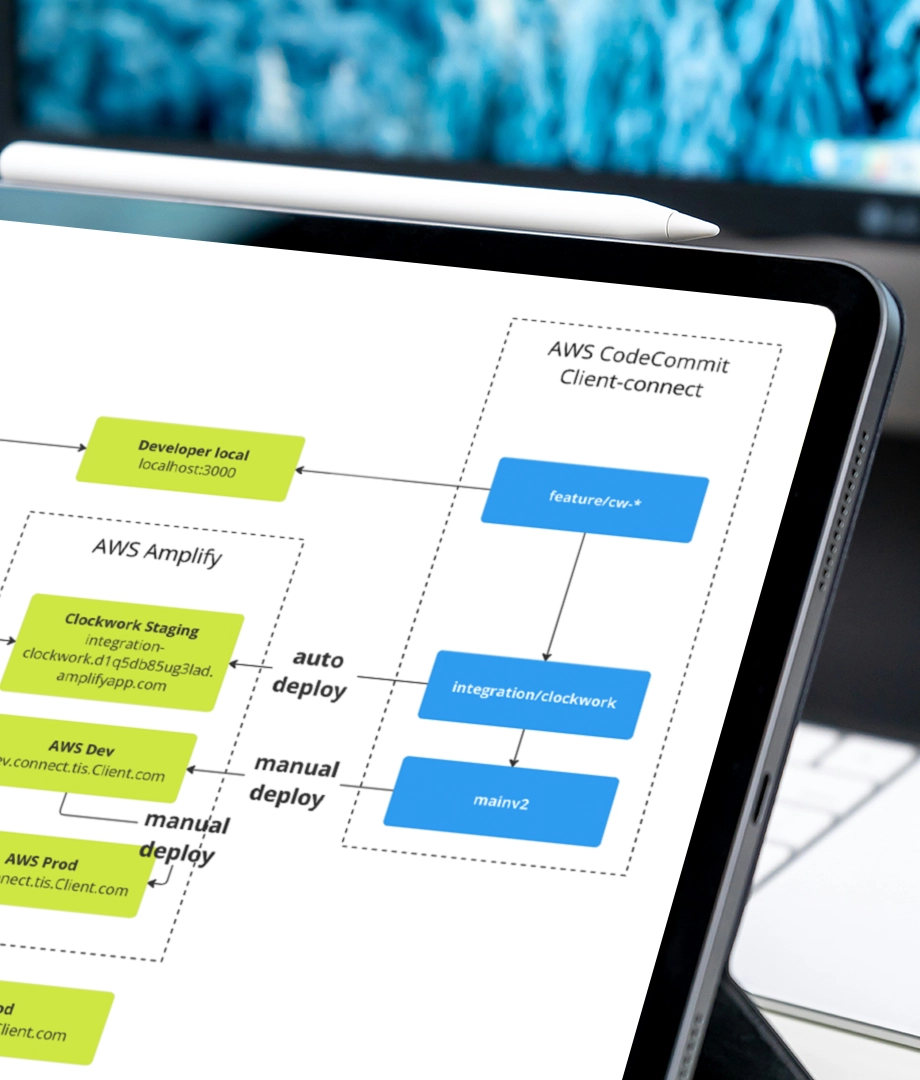
Once an entry point is established, engagements generally move through four stages: problem definition, stakeholder alignment, solution design, and execution support. You can see a full breakdown of how these phases unfold in What happens during a digital modernization engagement at Clockwork.
Problem definition rarely stops at the executive suite. The problem named in the boardroom is often a symptom, so the team interviews customer service reps, plant floor managers, and field sales engineers to find where value breaks down.
In a multi-phase pilot for a global manufacturing leader, connecting technology, process, and the people driving change proved decisive for modernizing their service delivery model. Similarly, during a digital overhaul for the City of Minneapolis, Clockwork worked directly alongside the city's internal digital team so technical knowledge and ownership stayed inside the organization after launch.
Why cross-functional manufacturing projects require upfront alignment across IT, sales, and operations
Industrial and Manufacturing solutions almost always cross departmental borders. A single dealer portal or quoting tool touches ERP inventory data owned by IT, pricing rules guarded by sales, and fulfillment schedules managed by operations.
If those three groups do not agree on priorities and success criteria before engineering begins, the best-written software will fail at launch. Clockwork brings IT, sales, operations, and leadership into alignment early, maintaining shared visibility throughout the build so competing departmental goals do not derail delivery.
For deeper tactics on resolving these cross-functional bottlenecks early, read How to fix low sales portal adoption before writing code.
What is changing in B2B consulting: governance and adoption on day one
For decades, mid-market B2B buyers treated security compliance and user training as post-launch checklists. You built the software first, ran a penetration test in week 11, and emailed a PDF training manual on Friday afternoon before Monday's go-live.
That sequence no longer works in manufacturing, finance, or insurance. Legacy ERPs hold sensitive pricing and proprietary CAD or supply chain data, while field teams will immediately revert to spreadsheets if a new tool slows down their daily routine.
Leading indicator: security and SOC 2 governance moving into the discovery phase
Enterprise buyers now audit a consulting partner's data security posture before discussing user interfaces. Clockwork embeds governance from the start: the firm is SOC 2 certified, client data is never used to train external AI models, and every engagement establishes clear data ownership and output accountability.
For organizations exploring automation or predictive analytics, reviewing these standards upfront—as detailed in Clockwork's guide to helping clients navigate the emergence of AI—prevents legal and procurement teams from stalling a pilot months into development.
Lagging indicator: measuring success by user adoption instead of on-time document delivery
The clearest sign of a broken consulting model is a dealer portal that launches on budget and sits unused six months later. Clockwork designs for the people who will use the software every day, not just the executives who signed the purchase order.
When change management and adoption strategy sit inside the core engineering contract rather than an optional add-on, teams validate workflows with real operators during prototyping. A field technician who helped test a mobile workflow in week four does not abandon it for a clipboard in week twelve.
Three predictions for B2B technology contracts over the next 36 months
Drawing on 25 years of delivery patterns across Upper Midwest manufacturers and enterprise service providers, three shifts will reshape how B2B companies buy technology consulting over the next three years:
- Fixed-scope, strategy-only RFPs will decline in mid-market manufacturing. Buyers are fatigued by six-figure slide decks that produce zero working software, pushing procurement toward 90-minute diagnostic workshops and timeboxed, pilot-first contracts that prove value in live workflows.
- Procurement teams will disqualify agencies without documented SOC 2 compliance and strict AI data isolation. As AI features become standard in B2B portals and internal tools, unverifiable data-handling promises will block vendor onboarding before discovery begins.
- Change management and internal team training will become mandatory line items in custom engineering statements of work. Boards are tired of funding software that field sales and plant operations refuse to open, forcing consultancies to tie final milestones to measurable user adoption.
How to scope your next engagement before talking to a consultancy
Before you invite any consulting partner into a scoping call, run through three internal checks to avoid paying a vendor to figure out your own organization:
First, interview the people closest to the daily friction, not just department heads. Ask customer service reps, plant supervisors, and field sales engineers where they rely on manual workarounds or shadow spreadsheets. If the executive team blames "outdated UI" while the floor blames "inaccurate ERP inventory sync," fix your problem statement before requesting bids.
Second, map which business units hold competing incentives over the outcome. Identify where IT security constraints, sales velocity targets, and operations fulfillment rules collide, and assign one accountable decision-maker for each group before kickoff.
Third, verify what scale of engineering you need. If your primary bottleneck is a slow marketing site, fragmented brand messaging, or lead-capture friction, enterprise custom software engineering is overkill—you need rapid marketing web delivery, which Clockwork handles through Tempo, its in-house studio built on Webflow and WordPress. Save custom software engineering and data architecture budgets for the core platforms, ordering portals, and ERP integrations that directly run your business.
If you know your digital operations need to change but competing priorities across IT, sales, and operations are holding progress back, start with a 90-minute Clockworkshop or reach out via Contact Clockwork to determine the right entry point for your team.